Geography
Deotsidh lies in the Hamirpur district of Himachal Pradesh, set in the Shivalik foothills. The shrine occupies a forested hilltop reached by a stepped climb — a small ascent that has always been part of the pilgrimage itself.
कथा · इतिहास
A child yogi, immortal in childhood, who chose a cave above Deotsidh as his eternal seat — and a tradition that has climbed the hill to meet him for centuries since.
Birth in the Shivalik foothills; the boyhood years among the cattle.
The Nath sampradaya rises across northern India; Baba Ji takes his place in the lineage.
The dhuna is established; the cave becomes the eternal seat.
Over the medieval centuries the present-day shrine takes form around the cave.
Each spring, lakhs walk the hill — the living continuation of the tradition.
"वह बालक जो योगी था — a child who was already a yogi."
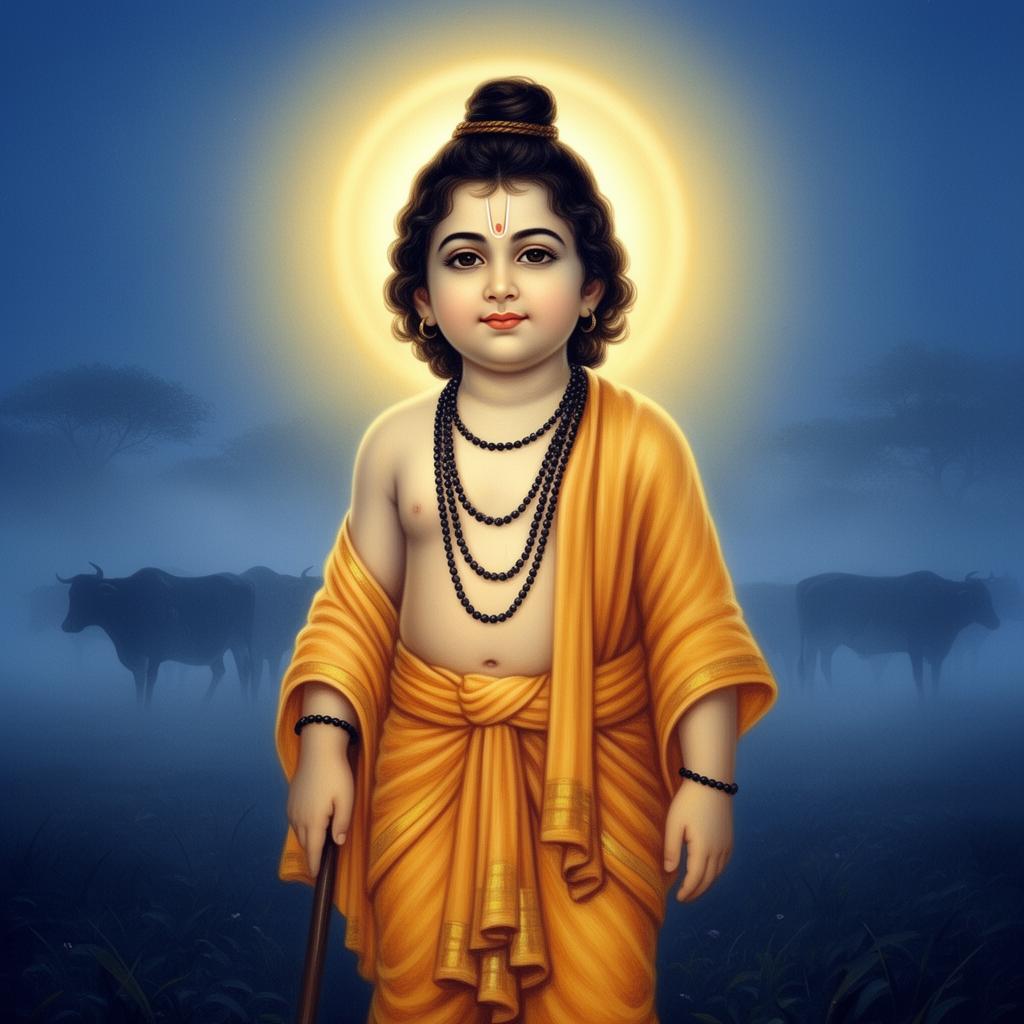
Oral tradition remembers Baba Balak Nath Ji as a child born into a humble pastoral household in the Shivalik foothills — a boy who took the cattle to graze at dawn and returned at dusk with verses on his lips that no one had taught him.
From his earliest years he was marked by an unusual stillness. He took the form of a child and chose to keep it; the boon of perpetual childhood, devotees say, was the boon of perpetual freshness — a heart that would never harden into the world.
"He did not build a temple. He stepped into the hill and made the hill his temple."
Above the village now called Deotsidh, in the Hamirpur district of Himachal Pradesh, a small stone cave opens into the hillside. Here the dhuna — the sacred fire — was first lit, and here, the tradition holds, it has never gone out.
The choice of place was deliberate. Hidden enough for tapasya, accessible enough for the devotee who walks. The cave became seat, shrine, and answer all at once; centuries later, the mela still climbs the hill to meet Him there.
"What devotion gives, devotion also binds — the boon and its quiet weight."
Among the most loved episodes is that of Mata Ratno — the woman whose tireless devotion drew Baba Ji into the everyday life of her household and, in the telling, into the larger life of the region.
Her offering of food and care; His acceptance and presence. From this exchange comes a boon long honoured at the shrine — and, with it, the historical practice that women have traditionally offered prayer at the outer precincts rather than entering the inner sanctum.
"Twelve winters of silence; one unbroken flame."
The legends describe a tapasya of twelve years undertaken in the cave — a span of unbroken sadhana through the changing seasons of the foothills, marked by silence, simple food, and the steady tending of the dhuna.
What returned from that silence was not a list of miracles but a presence — recognised by the cowherd and the king alike, by the woman at the chulha and the wandering ascetic on the road.
Baba Balak Nath Ji is held within an ancient line of yogis — a manuscript-tree of teachers reaching back to Shiva himself.
Deotsidh lies in the Hamirpur district of Himachal Pradesh, set in the Shivalik foothills. The shrine occupies a forested hilltop reached by a stepped climb — a small ascent that has always been part of the pilgrimage itself.
The cave is the original sanctum; the present-day temple precincts grew around it across the medieval and colonial periods, sustained by local patronage and the steady stream of devotees making the climb.
The Chaitra mela (March–April) draws devotees from Himachal, Punjab, Haryana, and beyond. Offerings of rot, gur, marigolds, and the ringing of the temple bells mark the arrival of each devotee at His seat.
Each object at the shrine carries a story; each story carries a teaching.
घंटा बजे · The Bell Rings
The simplest sentence in the pilgrimage — and the oldest. The bell is its echo.
जय बाबा बालक नाथ
From the boy with the cattle to the dhuna in the cave, from the first bell to the next devotee's footstep — the story keeps walking.